Foundations of Special Education (3rd ed.)

Kathleen VanTolAuthorJenni BreemsEdited by

This book surveys the provision of special education services to students in grades preK-12 with disabilities. It includes the history of special education, legal issues related to the field of special education, and characteristics of learners who qualify for services.

Texts

  • Cover of Chapter 1: Foundations: Overview and History of Special Education

    Chapter 1: Foundations: Overview and History of Special Education

    Kathleen VanTol

    The United Nations has declared that education is a universal human right. All children, regardless of disability, have a right to a free and appropriate public education. This chapter explains the Individuals with Disabilities Improvement Act (IDEA), Section 504 and other laws that govern special education services in the United States.

    • This text has 25 annotations
    • This text has 37 highlights
  • A teacher works with students at a table

    Chapter 2: Special Education Professionals and Placements

    Kathleen VanTol

    This chapter lays out the roles of professionals who work in the field of special education. It also explains the continuum of placements that professionals consider for children who qualify for services.

    • This text has 0 annotations
    • This text has 0 highlights
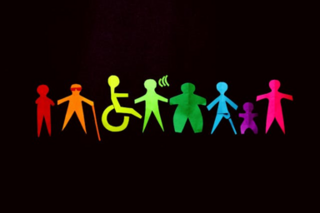
  • A group of colorful paper people with various disabilities.

    Chapter 3: Creating an Inclusive Mindset

    Kathleen VanTol

    In an inclusive classroom, all students, regardless of ability, will have equal access to available opportunities and resources. Likewise, inclusive schools will ensure that parents with disabilities have equal access to school resources and opportunities to be active members of the school community.

    • This text has 0 annotations
    • This text has 0 highlights
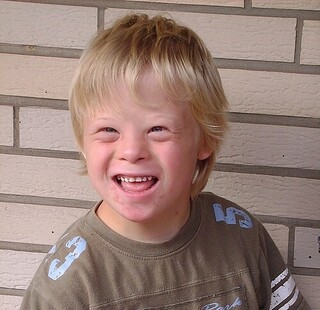
  • A smiling 8-year-old boy with Down Syndrome

    Chapter 4: Intellectual Disability

    Kathleen VanTol

    An intellectual disability is often present at birth and is characterized by two main components, a significant limitation in cognitive ability and an impairment in adaptive skills, which are the skills needed for practical everyday functioning. This chapter addresses the provision of special education services to children with intellectual disability.

    • This text has 0 annotations
    • This text has 0 highlights
  • A young boy with curly hair focused on writing in a blue notebook.

    Chapter 5: Learning Disabilities

    Kathleen VanTol

    This chapter defines the IDEA category of learning disabilities, with its prevalence and causes. Special educators will consider identification, placement, strategies, and accommodations that might benefit these students.

    • This text has 0 annotations
    • This text has 0 highlights
  • A boy in the primary grades bites a pencil while he works on writing his letters.

    Chapter 6: Attention Deficit Hyperactivity Disorder and Other Health Impairments

    Kathleen VanTol

    IDEA groups more than 200 health conditions, including ADHD, under the label of Other Health Impairment. The first part of this chapter explains the diagnosis, treatement and education of students with ADHD. The second part of this chapter surveys a few of the student health conditions that a special educator might encounter.

    • This text has 0 annotations
    • This text has 0 highlights
  • Happy child pulling a blue suitcase in a garden, enjoying a sunny day outdoors.

    Chapter 7: Autism Spectrum Disorders

    Kathleen VanTol

    Autism spectrum disorder is a developmental disability that impacts a child’s communication skills, social interaction, and behavior. This chapter surveys the history, symptoms, prevalence, and educational decisions for providing special education services to children with autism spectrum disorders.

    • This text has 0 annotations
    • This text has 0 highlights
  • A young boy with a pensive expression leans on the back of a green couch.

    Chapter 8: Emotional and Behavior Disorders

    Kathleen VanTol

    IDEA classifies all emotional and behavior disorders under the category of emotional disturbance. This includes a number of mental health and behavior disorders including anxiety, depression, eating disorders, obsessive-compulsive disorder (OCD), and conduct disorders. This chapter examines the causes, prevalence, student characteristics, and educational implications for learners in this IDEA category.

    • This text has 0 annotations
    • This text has 0 highlights
  • Two young girls lying on grass using homemade cup phones and string to talk to each other outdoors.

    Chapter 9: Communication Disorders

    Kathleen VanTol

    Communication disorders are one of the larger categories of disabilities for students served under IDEA. This chapter examines the general types of speech, voice, and language disorders that special educators may encounter. It includes sections on educational implications and on augmentative and alternative means of communication.

    • This text has 0 annotations
    • This text has 0 highlights
  • A girl with dark sunglasses is sitting on a couch reading a Braile book.

    Chapter 10: Low Incidence DisordersDevelopmental Delay, Orthopedic Impairment, Traumatic Brain Injury, Hearing Impairment, Orthopedic Impairment, Vision Impairment, and Multiple Impairments

    Kathleen VanTol

    Students in special education who have low incidence disorders are those with multiple impairments, orthopedic impairments, traumatic brain injury, or impairments in hearing and/or vision. This chapter will help special educators address the varied needs of these students.

    • This text has 0 annotations
    • This text has 0 highlights
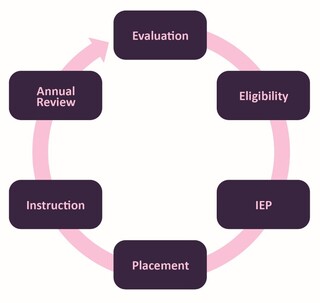
  • A circular representation of the special education process. Evaluation -> Eligibility -> IEP -> Placement -> Instruction -> Annual Review

    Chapter 11: Special Education Referral and Identification Process

    Kathleen VanTol

    In the United States, every local education agency must establish procedures for identifying the children in their district who may need special education services. This chapter outlines the processes for determining the types and amount of special education services that are required for these children to make educational progress.

    • This text has 0 annotations
    • This text has 0 highlights
  • Young woman with curly hair looks thoughtful against a bright pink backdrop

    Chapter 12: Writing a Plan

    Kathleen VanTol

    After a student has been identified with a demonstrated need for special education, the school is required to create educational plan to meet that student’s needs. In the United States, this plan is called an Individualized Education Program, or IEP. This chapter explains what IDEA requires when a school writes an IEP plan for a student.

    • This text has 0 annotations
    • This text has 0 highlights
  • A worker stands on metal scaffolding to make repairs.

    Chapter 13: Instructional Strategies

    Kathleen VanTol

    Well-designed individualized instruction is at the heart of special education. This chapter explains how to prioritize learning goals, scaffold supports, provide explicit instruction, group students, and teach lessons.

    • This text has 0 annotations
    • This text has 0 highlights
  • Three workers at a café pose together with smiles. Two of them are in wheelchairs and the third has Down Syndrome.

    Chapter 14: Transition

    Kathleen VanTol

    For students who receive special education supports and services, it is important to plan for the time when those supports and services will end and they will transition into adulthood. Transition planning is a process that guides students to consider the types of jobs, educational programs, and living options they might want to pursue after high school.

    • This text has 0 annotations
    • This text has 0 highlights

Dr. Kathleen VanTol / Author. Kathleen has over 40 years of experience working in the field of education. She holds a doctorate in special education from Western Michigan University and is a professor of special education and director of the Master of Special Education (MSpEd) program at Dordt University. She is also a Board Certified Behavior Analyst and a Board Certified Advocate in Special Education.

Jenni Breems / Editing. Jenni is the Director of Library Services at Dordt University's Hulst Library. She is an active participant in Iowa Private Academic Libraries, the Iowa OER Action Team, and library leadership activites through the Council of Christian Colleges and Universities.

I want to begin with a very special thank you to Jenni. I am so grateful to have had you as a partner in bringing this third edition to completion. Your careful editing, thoughtful questions, and remarkable attention to detail have made this book so much better. You have gone above and beyond, from finding images and resources that strengthen the content to building in accessibility features, tracking down citations, and attending to countless details that most readers will never see but that make such a difference in the finished book. Your knowledge, persistence, encouragement, and genuine care for this project have been invaluable. I couldn’t have asked for a better person to work alongside through this process.

I also want to thank all of the collaborators who offered suggestions and advice, shared their stories and experiences, reviewed our work, and provided feedback and encouragement. Your willingness to contribute your knowledge and perspectives has enriched this book and helped us create a resource that is stronger because of the many voices represented in it.

Finally, I remain grateful to those who contributed their talents to earlier editions of this book, including Annabelle, whose artwork helped bring our original vision to life, and Andres, whose research and careful work on the Spanish translation greatly expanded the reach of the project. Their contributions remain an important part of the story of Foundations of Special Education. -- Kathleen VanTol


Funding for previous editions of Foundations of Special Education provided through the IPAL OER Project and the Andreas Center at Dordt University.

Contact the author for a Spanish translation of the first edition.

Download Chapters (3rd ed.)

Metadata

  • publisher
    Dordt University
  • publisher place
    Sioux Center, IA
  • rights
    Copyright © 2026 by Kathleen VanTol. Foundations of Special Education is licensed under a Creative Commons Attribution-NonCommercial-ShareAlike 4.0 International License, except where otherwise noted.
  • rights holder
    Kathleen VanTol
  • version
    3