A Taste of Italy, A Dream Awakened
By Kalissa Reed, Gracelyn Neal, and Jasmine Johnson
A band plays music on the corner of a street; their music is what you would expect to hear from a traditional Italian group, soft and beautiful. The scent of fresh basil and tomato fills my nose, evoking a warm sensation within me. This only reinforces my increasing appetite. The setting sun warms my shoulders as a beautifully made ceramic dish is seated before me, with a masterpiece in itself served on top. A picture-worthy, exquisite cuisine that captivates at first sight. A pizza in its truest form, inspired directly by Italian culture. The crust is slightly charred, crackling as I tear into it, revealing a soft, warm, airy inside. Various types of white and pale-yellow cheeses blanket the pizza. The red sauce stands out strikingly against the contrast of the many faint-colored cheeses.
The anticipation is palpable, making it impossible to deny indulging in this delicacy. I seized my first piece, folding it slightly. Olive oil runs down my fingers as warm wisps of steam fill my nose. It was truly love at first bite. Each ingredient creates a synergistic effect. The sweet, slightly acidic tomato sauce pairs delightfully with the creamy cheese. The experience is heavenly. I lean in to grab another bite as an alarm starts beeping…
I groggily awake to my alarm in my dorm, which is a great disappointment as I realize I am not on a street corner in Italy. Though it felt so real, it was only a dream. There is no warm sun or beautiful pizza in front of me. This realization does not stop the growling of my stomach or the watering in my mouth. I have a craving for one thing, and no substitution will do. I need to bring that Italian experience straight to Berea, Kentucky.
Connecting Cultures Through Pizza
Pizza is the staple of most American Friday nights. It is a food that nearly everyone loves and enjoys on a regular basis. Even now, as college students, pizza remains a staple in our diet. It is simple, filling, cheesy, and completely customizable. It can even bring a sense of nostalgia from our own childhoods. This shared connection made our group curious about where pizza originated and what traditional Italian pizza truly looks and tastes like. Italy, the birthplace of pizza and many other beloved dishes, quickly became the focus of our search. As a group, we felt that pizza not only represents our American culture, experiences, and daily life, but also carries a deep and meaningful history that connects people across the world through food.
When we began searching for the perfect authentic Italian recipe, we stumbled upon the Quattro Formaggi Pizza, a four-cheese pizza that reflects Italy’s rich culinary tradition. This recipe comes from Emily, a temporary resident of Italy, who discovered the Italian way of cooking during her time there. We chose this recipe because it combines simplicity with authenticity and highlights one of Italy’s greatest culinary values, using fresh, high-quality ingredients to create something both comforting and flavorful. As a group, we also found it important to look for recipes written by people who have lived in Italy, since their experiences capture the true essence of Italian cooking. The author even notes that this recipe can be customized and therefore renamed as a white pizza. Emily wrote, “In Italy, they have this 4 formaggi cheese spread, and if you go to the wrong pizzeria or tourist trap, you’ll get that spread all over your pizza instead of real cheese. You can imagine my disappointment whenever this happened (always read the description, ha!)” (Emily, 2021). In some tourist spots or lower quality restaurants, imitation versions of this traditional dish can be found, where processed cheese spreads are used instead of authentic Italian cheeses.
Italian pizza itself has a fascinating history, originating from plain flatbreads in ancient Greece and Rome before evolving into the modern pizza we know today in Naples, a major city in the Roman Empire (Dhar, 2024). This small but important detail shows how pizza’s humble beginnings led to its vast popularity and global expansion. Today, pizza can be found in hundreds of cities around the world and continues to bring people together through its universal appeal.
From Flatbread to Pizza: The Evolution of a Culinary Icon
Pizza is one of the most versatile foods. It can be manipulated to accommodate any taste with just a few extra ingredients. One can experiment with flavors by adding a touch of seasoning, different meats, and even a pineapple if you are wild. Experimentation in creating foods was born many years before the still ever-evolving pizza we know and love today. The pizza in the freezer section resembling a piece of cardboard wrapped in plastic wrap or ordered for take-out is the great, great, great, many more greats, grandchild of the beloved flatbread.
The earliest records of flatbread, also known as lavash, date back to 10,000 BCE. It is noted that these flatbreads were made in the Fertile Crescent by Neolithic tribes. Archaeological evidence portrays that the people of this tribe combined grains they had ground into a fine powder, producing flour and water to create a dough, which was then baked over stones made hot from a fire. Serving as a base, flatbreads were missing a chance to be more than just bread, so the addition of toppings came into play little by little.
Toppings that were chosen depended on plenty of factors. The environment of the creation of flatbreads, including the culture of the people making them, along with what foods were readily available to the people making them, played huge roles when deciding toppings for one’s flatbread. Ingredients like herbs and seeds were among the first introduced toppings commonly used by Egyptians, Greeks, Mesopotamians, and Sumerians. Cheese was introduced later; notably, Persian soldiers added cheese and dates to flatbreads while cooking, utilizing their shields in active duty. This fact enhances not only the versatility of taste but also the place. Individuals carried their way of making flatbread worldwide, and distinctive styles emerged, each introducing a unique approach to the creation of pizza.
The word “pizza” was born in Italy. Dating back to around 997 CE, “pizza” became an accepted name for the flatbread that absorbed cultures and acquired many toppings from all around the world. Modernized pizza, the treasured red sauce and cheese combo, was established in Naples, Italy. In Naples, poor communities loved pizza due to its easy and affordable nature. The inclusion of the tomato in the 1500s turned the upper class away due to uncertainty, as it was a crop from the New World. After about a century of creating pizza as street food, “tomato-topped pizza was firmly established in Naples” (Donnie). Despite pizza’s flavorful and diverse history, Italy gets most of the credit for the creation of pizza simply because they have made it most recognizable.
In Crust We Trust
This recipe brings the experience of a trip to Italy straight into your home. The process of creating the dish is an homage to Italian culture. You are not simply combining ingredients, but participating in the art form of pizza making, which is passed down from generation to generation. “The pizzaiolo, the pizza maker, is a skilled craftsman who takes pride in their work. The dough must be kneaded with precision, the ingredients carefully selected, and the pizza baked in a wood-fired oven at the perfect temperature to achieve the desired texture and flavor” (Whitaker, 2025). This is not a haphazard culmination, but a creation that requires precision, care, and attention to detail to create the perfect pie. The use of fresh ingredients and meticulous attention to detail are what make an authentic Italian pizza. Giving us the privilege of experiencing the sensation of a delicious pizza on a warm street corner in Italy, straight from the comfort of our home.
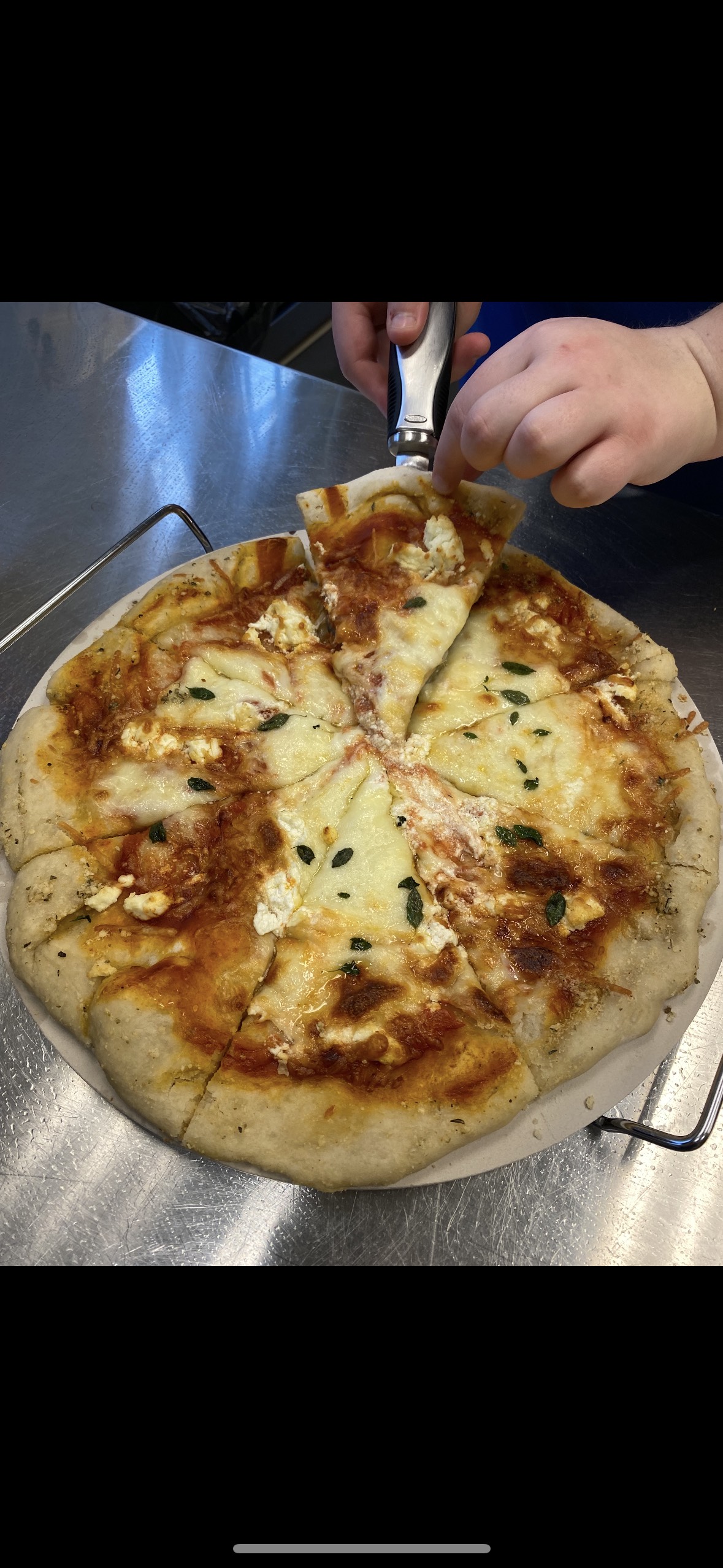 Quattro Formaggi Pizza - Four Cheese
A traditional Italian pizza that blends mozzarella, goat cheese, Parmesan, and Gorgonzola to create the ultimate cheesy indulgence. The combination of these four distinctive cheeses melts into a rich, creamy harmony, making this pizza a true celebration of Italy’s love for cheese.
Prep Time: 3 hours Cook Time: 15 minutes Total Time: 3 hours & 15 minutes
Servings: 12 Servings (makes 2 large pizzas)
Ingredients
Pizza Dough
- 4 cups Italian flour (1.1 lb./500g)
- 2 tsp fast-action dried yeast (7g)
- 1 1/3 cups of lukewarm water (320ml)
- 1 tbsp olive oil
- 1 pinch of salt
- 0.5 tsp sugar
- semolina or regular flour for dusting
Toppings
- 2 balls of mozzarella (250g)
- 1/2 cup gorgonzola (100g)
- ½ cup goat cheese (120g)
- ½ cup parmesan freshly grated (40g)
- ½ cup crushed, strained tomatoes passata (200g)
- Black pepper optional
Instructions
Make the Dough
- First, put the flour, salt, and yeast in a bowl, making sure to put the salt and yeast at opposite sides.
- Make a well in the center and add the water and olive oil. Mix it together until a rough dough forms. If it's too sticky, you can gradually add a little more flour.
- Dust a clean work surface with a little flour and knead the dough for around 10 minutes until it's smooth and elastic. If you lightly press your finger on the ball of dough, it should spring back up easily.
- Add 1/2 tbsp of olive oil to a large clean bowl and rub all over until the bowl is coated. Shape the dough into a ball and place it in the bowl. Rub the top of the dough with a tiny amount of olive oil.
- Cover with plastic wrap (cling film) and leave in a warm place for at least 3-4 hours or until tripled in size.
Bake the Pizza
- Pre-heat the oven to your highest setting, at least 450°F/230 °C, and add your baking trays to heat up.
- Cut the dough into 2 or 4 pieces, depending on how big you’d like them, then either roll out on a lightly floured surface with a rolling pin or shape with your hands to fit your baking tray.
- Remove the baking tray from the oven and sprinkle with semolina or flour. Carefully place the pizza dough on top.
- Spread the pizza base evenly with tomato sauce and sprinkle with even amounts of cheese. Bake until melted, bubbling, and golden (around 10-15 minutes).
References
Dhar, R. (2024, November 1). Who invented pizza: Is Italy truly the birthplace of pizza? History Cooperative. https://historycooperative.org/who-invented-pizza/
Donnie. (2025, June 27). The History of Pizza: From Ancient Flatbreads to a Global Icon – Eats History. eatshistory.com/the-history-of-pizza-from-ancient-flatbreads-to-a-global-icon.
Emily. (2021, February 9). Quattro Formaggi (Four Cheese) Pizza. Inside the Rustic Kitchen.
https://www.insidetherustickitchen.com/quattro-formaggi-pizza/
Whitaker, M. (2025, May 10). How Pizza Embodies Italian Culture: A Slice of History and Tradition. Tasty Food Lovers. https://tastyfoodlovers.com/how-does-pizza-represent-italian-culture/